
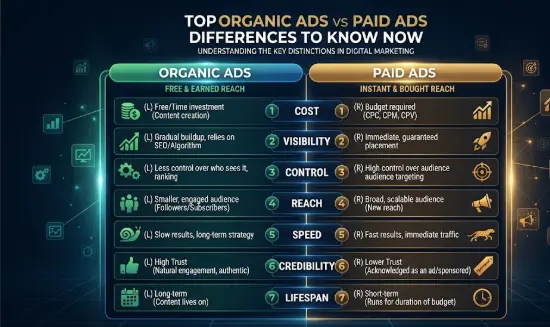
In today’s digital world, You must have a knowledge of This guide explains the Organic Ads vs Paid Ads debate in simple language. By the end, you will have a clear understanding of how both methods work and when to use them for maximum results.
businesses are always looking for better ways to reach potential customers online. Whether you own a small business, run an eCommerce store, or manage a growing brand, online marketing plays a major role in attracting visitors and generating sales.
One of the most common questions marketers ask is about the difference between organic advertising and paid advertising. Understanding these marketing methods can help you choose the right strategy for your goals, budget, and audience.
This guide explains the Organic Ads vs Paid Ads debate in simple language. By the end, you will have a clear understanding of how both methods work and when to use them for maximum results.
What Are Organic Ads?
Organic ads refer to marketing efforts that generate visibility without directly paying for each click, impression, or visit. These methods rely on quality content, search engine optimization (SEO), social media engagement, and long-term audience building.
Examples include:
- Ranking on Google through SEO
- Publishing blog articles
- Sharing social media content
- Building an email subscriber list
- Creating valuable resources for users
Organic marketing focuses on earning attention naturally rather than purchasing it.
What Are Paid Ads?
Paid ads are advertisements where businesses pay to display their content to a targeted audience. These ads appear on search engines, social media platforms, websites, and mobile apps.
Common examples include:
- Google Ads
- Facebook Ads
- Instagram Ads
- LinkedIn Ads
- YouTube Ads
Paid advertising offers instant visibility because brands can place their message directly in front of potential customers.
Why Understanding Organic Ads vs Paid Ads Matters
Many businesses waste marketing budgets because they do not fully understand the strengths and limitations of each strategy. Learning about Organic Ads vs Paid Ads helps companies make smarter decisions and achieve better returns from their marketing efforts.
Let’s look at the most important differences.
1. Speed of Results
The biggest difference in Organic Ads vs Paid Ads is the speed at which results appear.
With organic marketing, results usually take time. A website may need several months to rank in search engine results. Building trust and authority also requires consistent effort.
Paid advertising works much faster. Once a campaign goes live, businesses can start receiving clicks, traffic, and leads almost immediately.
- Organic Ads
- Slow but steady growth
- Long-term visibility
- Requires patience
- Paid Ads
- Instant traffic
- Quick lead generation
- Immediate visibility
If you need fast results, paid campaigns often work better. If you are focused on long-term growth, organic marketing can be more effective.
2. Cost Structure
Another major factor in Organic Ads vs Paid Ads is cost.
Organic marketing is not free because it still requires time, content creation, SEO work, and marketing effort. However, you do not pay for every visitor who clicks on your content.
Paid advertising requires a specific budget. Businesses are charged based on impressions, clicks, conversions, or other campaign objectives.
Organic Marketing Costs
Content creation
SEO optimization
Social media management
Website improvements
Paid Advertising Costs
Cost per click (CPC)
Cost per impression (CPM)
Campaign management expenses
For businesses with limited budgets, a strong organic strategy can provide excellent value over time.
3. Trust and Credibility
Consumer trust is another important difference in Organic Ads vs Paid Ads.
People often trust organic search results more because they earned their position naturally. Users usually believe that websites ranking organically provide valuable information.
Paid advertisements are clearly labeled as sponsored content. While they can generate significant traffic, some users skip promotional listings and focus on organic results.
Organic visibility often provides stronger credibility because audiences view it as earned exposure rather than purchased exposure.
This is why many brands invest heavily in content marketing and search engine optimization alongside advertising campaigns.
4. Sustainability
When discussing Organic Ads vs Paid Ads, sustainability is extremely important.
Paid traffic stops almost immediately when advertising budgets stop.
For example, if a company spends money on Google Ads, the traffic usually disappears once the campaign ends.
Organic content works differently.
A well-written article, optimized landing page, or educational resource can continue bringing visitors for months or even years after publication.
Benefits of Organic Marketing
Long-lasting traffic
Sustainable growth
Better long-term return
Benefits of Paid Marketing
Predictable reach
Immediate visibility
Easy scaling opportunities
Businesses seeking long-term digital growth often combine both approaches.
5. Targeting Capabilities
Audience targeting creates another clear distinction in Organic Ads vs Paid Ads.
Organic marketing reaches users through search intent and content discovery. People find businesses naturally while searching for information or solutions.
Paid advertising offers advanced targeting features.
Advertisers can target people based on:
Age
Location
Interests
Behavior
Income level
Online activity
This level of precision makes paid advertising extremely powerful for businesses trying to reach highly specific customer groups.
The targeting advantage is one of the strongest reasons many marketers invest in paid traffic campaigns.
6. Return on Investment Over Time
When evaluating Organic Ads vs Paid Ads, return on investment plays a major role.
Paid advertising can produce fast sales and leads. However, businesses must continue spending money to maintain those results.
Organic marketing takes longer to generate results but can create a stronger long-term return.
For example, a high-ranking blog article may generate thousands of visits without requiring additional advertising costs.
The best approach often depends on business goals.
If immediate sales are required, paid campaigns may deliver faster value. If long-term authority is the goal, organic marketing provides lasting benefits.
7. Scalability and Growth Potential
The final difference in Organic Ads vs Paid Ads involves scalability.
Paid campaigns are easy to scale. Businesses can increase budgets and reach more people very quickly.
Organic growth generally requires additional content, stronger SEO efforts, and audience development.
However, organic traffic often becomes more valuable over time because it builds brand authority and customer trust.
Successful companies commonly use both strategies together.
They use paid campaigns for instant exposure and organic content for sustainable business growth.
Which Strategy Is Better?
After examining Organic Ads vs Paid Ads, many people ask which option is better.
The truth is that neither strategy is universally superior.
The right choice depends on:
- Marketing goals
- Business budget
- Industry competition
- Growth timeline
- Target audience
Organic Marketing Is Better When:
- You want consistent long-term traffic
- You are building brand authority
- You have patience for gradual growth
- You want lower long-term acquisition costs
- You need immediate visibility
- You are launching a new product
- You want quick lead generation
- You have a dedicated advertising budget
In most situations, combining both methods produces the strongest results.
Best Practice: Use Both Together
Instead of choosing one side of the Organic Ads vs Paid Ads discussion, smart businesses often integrate both strategies.
A balanced approach may look like this:
- Use SEO to build long-term traffic.
- Create helpful content for your audience.
- Use paid campaigns to promote offers and generate fast leads.
- Retarget visitors through advertising.
- Analyze performance data regularly.
This combination allows businesses to enjoy both short-term wins and long-term growth.
Frequently Asked Questions(FAQs)
Q.1 Are organic ads completely free?
Ans. No. Organic marketing requires time, effort, content creation, SEO work, and website optimization. However, you do not pay directly for every click or visitor.
Q.2 Do paid ads work faster than organic marketing?
Ans. Yes. Paid advertising can start generating traffic almost immediately after launching a campaign, while organic growth often takes time.
Q.3 Can small businesses benefit from both strategies?
Ans. Absolutely. Small businesses often use organic content to build authority while using paid ads for lead generation and brand visibility.
Q.4 Which delivers better ROI?
Ans. The answer depends on business goals. Organic marketing usually delivers stronger long-term value, while paid campaigns provide faster short-term results.
Conclusion
Understanding Organic Ads vs Paid Ads is essential for any business that wants to grow online effectively. Organic marketing helps build trust, authority, and sustainable traffic, while paid advertising delivers immediate visibility and faster results.
Rather than viewing these methods as competitors, businesses should see Organic Ads vs Paid Ads them as complementary tools. The strongest marketing strategies often combine search engine optimization, content marketing, social media engagement, and targeted advertising campaigns.
By using both approaches strategically, brands can attract more visitors, generate qualified leads, improve conversion rates, and achieve steady business growth in an increasingly competitive digital landscape.