
Social Media Marketing: Benefits, Strategies & Growth
Social Media Marketing is the marketing that promotes products, services, or brands through social media platforms like Facebook, Instagram, Twitter, LinkedIn, etc. It helps companies build strong connections with their targeted audience, increase brand awareness, generate quality leads, and build strong and powerful relationships with their customers.

What is Social Media Marketing? Explain?
Social media marketing is a powerful technique that helps businesses promote their products, services, and brands through social platforms. It focuses on creating and publishing valuable content and attracting the right audience to engage with what a business offers. It also helps businesses understand customer behaviour, increase brand awareness, attract potential customers, and connect with the right audience.
With the rapid growth of the internet and online platforms, social media has become one of the most powerful ways for businesses to connect with customers. Through platforms like YouTube, Instagram, and LinkedIn, brands can improve their visibility and move closer to their marketing goals.
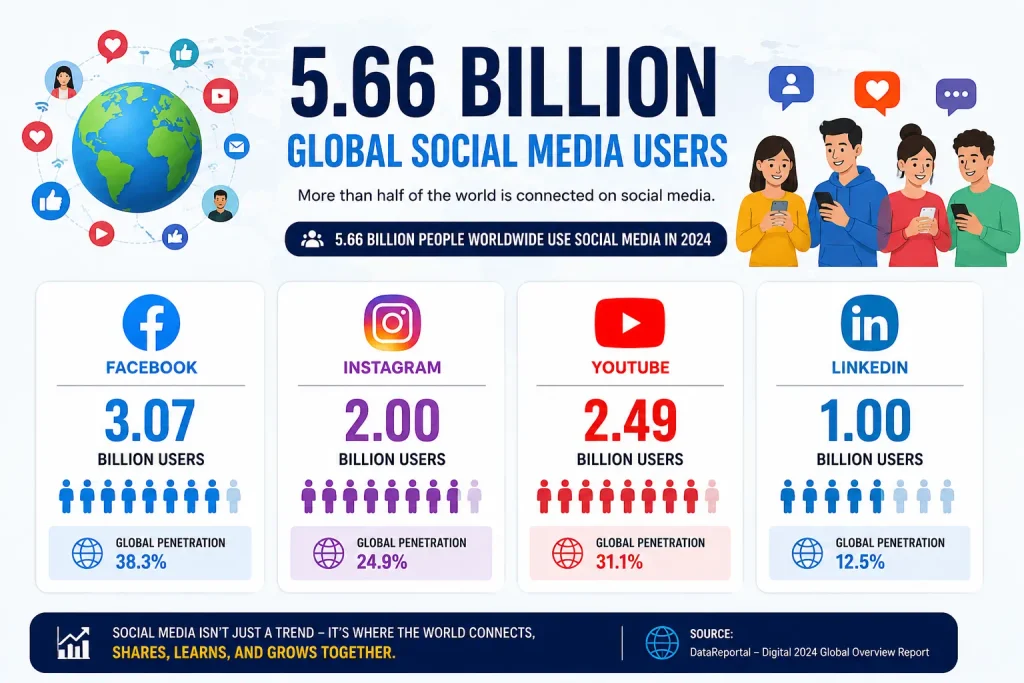
As of 2025, around 5.66 billion people are active on online platforms, with 3.07 billion on Facebook alone — making it one of the world’s largest digital communities. This is why having a defined social media marketing strategy for business growth matters more today than ever before. The audience is massive, but so is the competition for their attention.
Benefits Of Social Media Marketing
In today’s digital era, most of the people spend their time using online platforms like Instagram, Facebook, and so on. Businesses have greater opportunities to promote their products and services. It helps brands connect with the audience to generate quality leads. Here, we study important benefits of this approach
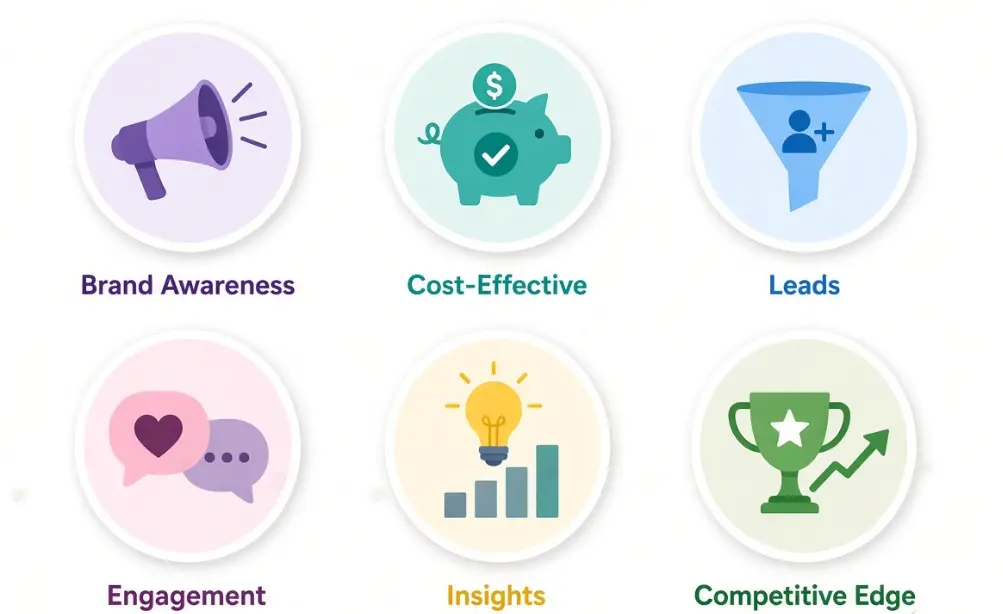
- Increases brand awareness: It helps businesses introduce their brands to a larger audience through consistent and attractive content. Every post, story, and video helps the audience to remember the brand which they follow.
- Cost-effective marketing: One of the biggest advantages of this marketing is its ability to deliver strong business results without spending unnecessary money.
- Generate leads and sales: It helps businesses reach the right audience with targeted campaigns, attract potential customers, and drive steady growth through quality leads.
- Improves Customer engagement: It opens a direct line between businesses and their audience through comments. This two‑way interaction not only builds stronger bonds but also increases trust and keeps people genuinely connected with the brand.
- Provides valuable customer insights: Every like, comment, and share gives businesses real data about what their audience actually wants, which helps refine future content and offers.
- Builds competitive advantage: Brands that engage actively and consistently on social media tend to stay top-of-mind compared to competitors who post irregularly or ignore their audience altogether.
Best Strategies for Social Media Marketing
A successful social media strategy is not just posting valuable content consistently. It requires a clear requirement of their targeted audience, consistent effort, and a focus on creating valuable content or meaningful interactions. By following the right and effective strategies business can increase attraction or engaging customers, strengthen their brand presence, and achieve long term growth and success. Here are some of the most important. These strategies can help your business grow faster.
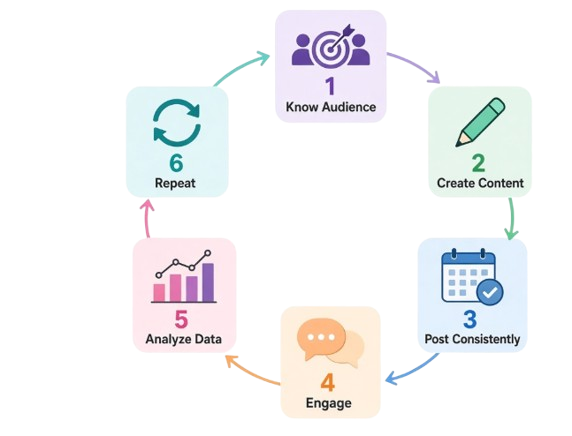
- Creating High-Quality Content: High-quality content helps your brand stand out online. Share content that is useful and relevant for your audience to build trust and encourage meaningful interactions.
- Consistently Posting: A regular posting schedule keeps your audience engaged and improves brand visibility. It also helps build credibility over time.
- Know your audience: Every strong social media strategy starts with a clear understanding of who you’re talking to. When you clearly understand what your audience needs, likes, and how they behave, you can create content that feels relevant, connects deeply, and drives real impact.
- Follow what’s trending: The landscape evolves fast. By keeping pace with new features, fresh content formats, and shifting audience preferences, your brand stays relevant, competitive, and closer to its community.
- Stay connected with your audience: Responding to comments, answering questions, and engaging often builds trust, strengthens loyalty, and creates an active online community through consistent communication.
- Using data to refine content: Reviewing which posts perform best — in terms of reach, comments, and shares — helps a business double down on what actually works instead of repeating ineffective habits.
- Choosing the right platform mix: Not every business needs to be active everywhere. Focusing effort on the one or two platforms where the target audience is genuinely active tends to produce stronger results than spreading thin across five platforms.
How social media marketing helps in business growth
It helps businesses grow by reaching the right people at the right time, building connections that drive visibility, trust, and long‑term success. Rather than depending only on traditional ads, businesses can use these platforms to connect directly with people, grow visibility, and build genuine customer relationships. Every valuable post, customer interaction, or campaign helps strengthen trust and creates more opportunities for people to learn about the brand.
A strong social media presence also supports business growth by driving targeted visitors to a company’s website or landing pages. When businesses consistently share helpful content and respond to their audience, they are more likely to generate quality leads and convert them into loyal customers. Over time, these consistent efforts improve customer retention, increase brand recognition, and create sustainable growth. By adapting to customer preferences and monitoring performance, businesses can continue improving their marketing strategy while staying competitive in an ever-changing digital landscape.
This is where a defined social media marketing strategy for business growth becomes essential rather than optional. Businesses that adapt to customer preferences, monitor performance regularly, and adjust their approach based on real data tend to stay competitive in an ever-changing digital landscape — while those that post without a plan often plateau or lose relevance as trends shift around them.
Tools That Support a Strong Social Media Marketing Strategy
Building this kind of strategy doesn’t have to rely on guesswork. A range of tools now exist to help businesses plan, schedule, and measure their efforts without wasting time on manual work. Scheduling tools like Buffer, Hootsuite, or Later allow businesses to plan content in advance, keeping posting consistent even during busy weeks. Analytics tools built into each platform, such as Instagram Insights or Facebook Business Suite, reveal exactly which posts perform best, so future content can be shaped around real audience behaviour rather than assumptions.
Design tools like Canva have also made it possible for businesses without a dedicated design team to create professional-looking visuals quickly. Meanwhile, listening tools help brands track mentions, hashtags, and conversations happening around their industry, giving them a chance to join relevant conversations in real time. Together, these tools turn the plan from a rough draft into a well-organized, measurable system that a business can refine month after month.
How Paid Promotion Supports Social Media Marketing Strategy
Organic content helps to build trust with the audience, but paid promotion can give faster results. Platforms like Facebook Ads and Instagram Ads help businesses to reach the right people based on age, location, interests and past activities. A good strategy can use both organic and paid promotion. Organic content helps in building relationships, while paid ads can increase reach during product launches, offers or special seasons.
Even a small budget can give good results if the ads are targeted properly. Sometimes, spending a big amount without proper targeting does not give good results. Businesses should first run small campaigns and check which audience is responding better. After that, they can increase the budget on the campaigns which are giving better results. This helps businesses to use their money in a better way and avoid unnecessary spending.
Future of Social Media Marketing
This field is changing very fast, and businesses that can adapt can get better results. Short videos, live streams, polls, and Q&A features are becoming more popular on these platforms. These types of content can sometimes get more reach than normal image posts. Artificial intelligence is also becoming useful here. It can help businesses find content ideas and choose better times to post. This makes a data-based social media marketing strategy easier for small businesses with limited resources.
Privacy rules are also becoming stricter, and people are becoming more careful about the content they watch and follow. Because of this, being real and honest is becoming more important. Brands that show real people, real work, and real customer stories can build better trust with their audience. In the future, businesses should treat their as something that can change with time. They should not follow the same plan forever. Businesses that keep learning and changing their strategy can have better chances of growing in the changing digital world.
Frequently Asked Questions(FAQs)
Q 1. Which Social Media platform should a business choose first?
Ans. Choose the platforms where your audience actually spends time. Instead of being everywhere, focus on one or two that matter most — this brings stronger impact and faster growth.
Q 2. What mistakes kill Business Growth?
Ans. Lack of clear planning, weak or inconsistent branding, ignoring customer voices, pushing out poor content, and not checking performance.
Q 3. How do businesses keep improving their online presence?
Ans. A strong online presence grows when businesses share meaningful content, connect actively with their audience, stay consistent, track what’s working, and adjust to shifting customer needs and market trends. Regular improvement and customer-first thinking turn visibility into long‑term success.
Q 4. Why does a clear marketing plan matter for business success?
Ans. A clear marketing plan gives businesses a roadmap guiding them toward the right audience, sharper decisions, and smarter use of resources. With defined goals and consistent focus, it turns everyday efforts into steady growth and long‑term success.
Q 5. Does every business really need this kind of marketing?
Ans. Yes, social media marketing benefits every business. It boosts visibility, builds trust, attracts new customers, and helps create lasting relationships that keep the brand strong and relevant.
Conclusion
Social media marketing today is more than just posting daily updates — it’s about building genuine connections in the digital world. It gives businesses a chance to reach the right people, grow brand awareness, and create relationships that actually matter. But growth doesn’t happen automatically; it needs a clear plan, valuable content, consistent effort, and regular check‑ups on what’s working. Whether you’re running a small shop or a big company, the right approach can add lasting value. By staying close to your audience, adapting to new trends, and avoiding common mistakes, businesses can strengthen their online presence, earn trust, and keep growing steadily. With patience, creativity, and consistency, it becomes a powerful tool to keep your brand relevant and connected.